
- Home
- New Patients
- Kids
Kids
Orthodontic Care for Kids in Jersey City
A thoughtful start for a growing smile
Your child’s smile is still developing—and there is more to understand than whether the front teeth look straight. At Miso Orthodontic Studio, we evaluate how the teeth, jaws, and bite are developing together, with attention to facial balance, oral habits, and concerns you may have noticed at home.
Our approach is proactive and individualized. When a developing problem would benefit from early treatment, we explain what we recommend, why the timing matters, and what treatment can realistically accomplish.

When should my child first see an orthodontist?
The American Association of Orthodontists recommends a first orthodontic evaluation by age 7, or earlier if a concern is noticed.1 At this stage, a combination of baby teeth and permanent teeth helps an orthodontist assess development and identify issues that may deserve attention.
An early visit gives your family a clearer understanding of your child’s needs. Some children benefit from treatment while they are growing; others benefit from monitoring until a more appropriate time.
What we evaluate
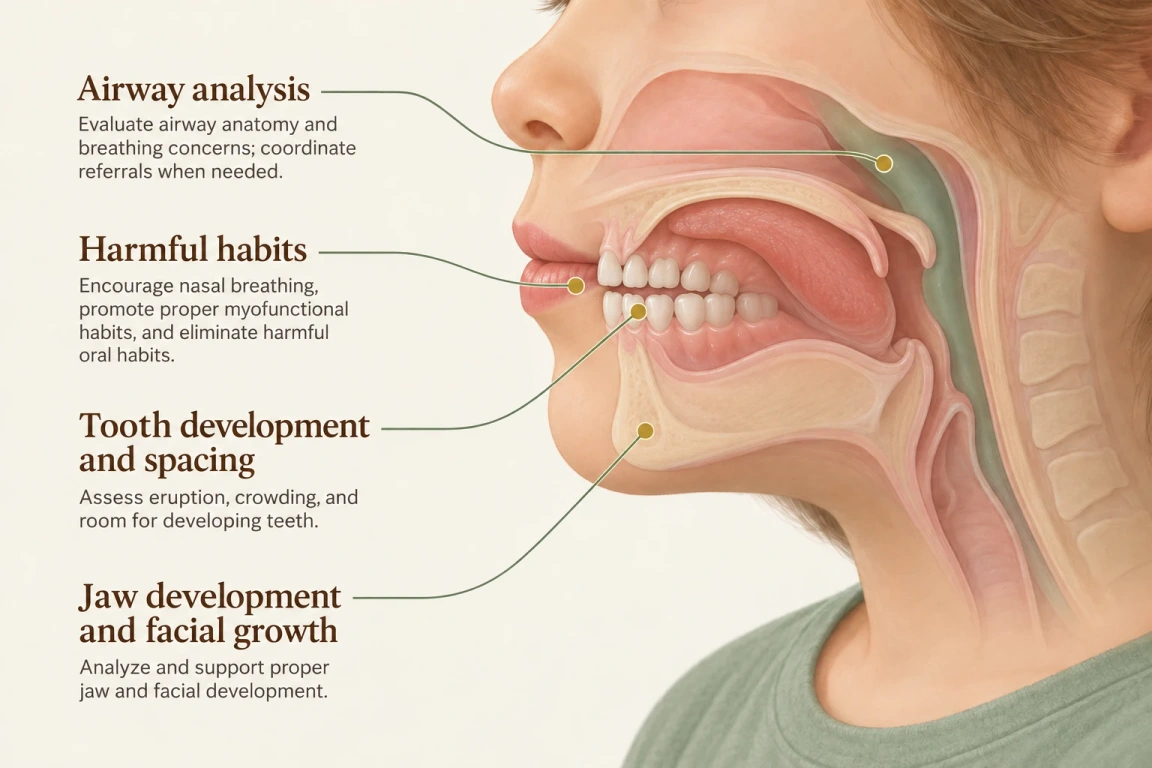
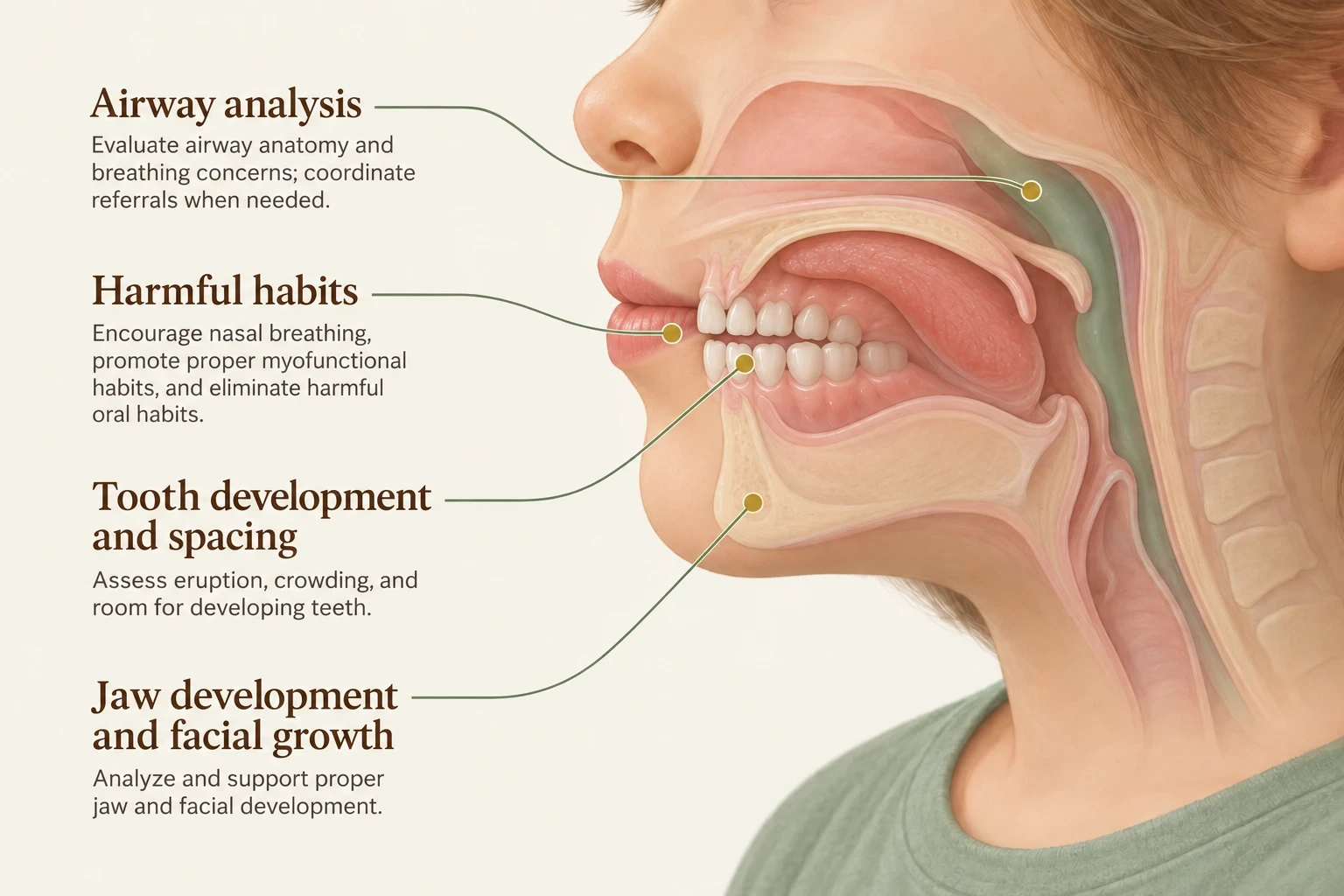
Your child’s assessment looks at how the teeth, jaws, and bite are developing together. The illustration highlights four areas we look at closely.
- Airway analysis
- Evaluate airway anatomy and breathing concerns; coordinate referrals when needed.
- Harmful habits
- Encourage nasal breathing, promote proper myofunctional habits, and eliminate harmful oral habits.
- Tooth development and spacing
- Assess eruption, crowding, and room for developing teeth.
- Jaw development and facial growth
- Analyze and support proper jaw and facial development.
More about your child’s assessment
Your child’s assessment at Miso considers:
- Tooth development: How baby teeth are being lost, how permanent teeth are coming in, and whether there are eruption concerns.
- Space and alignment: Crowding, spacing, and room for developing teeth.
- Jaw and palate development: The width and relationship of the jaws, including the upper jaw and roof of the mouth.
- Bite function: How the teeth meet and whether the jaw shifts when biting.
- Facial profile and balance: How the teeth and jaws relate to the lips and facial proportions.
- Oral habits and tongue posture: Habits such as thumb sucking and observations about tongue position that may be relevant to treatment planning.
- Breathing and sleep history: Parent-reported concerns and findings that may warrant further medical evaluation.
These findings help us develop a diagnosis before recommending a treatment plan.
Our approach to early orthodontic treatment

Early orthodontic treatment, also called Phase I or interceptive treatment, addresses a specific developing problem while a child still has some baby teeth.
We believe in early intervention when it can make a meaningful difference. Addressing certain problems while the teeth and jaws are developing can help prevent them from becoming more complex and may allow a simpler, less invasive approach than waiting until later. The right timing depends on the problem and your child’s stage of development.23
The benefits can also begin during childhood. Depending on the diagnosis, early treatment may improve how the teeth meet, relieve a bite interference, or make room for a permanent tooth to come in. Our goal is to address a current need while supporting the next stages of development.3
Treatment may involve braces, clear aligners, a palatal expander, a facemask, or another appliance selected for your child’s needs. We will explain the purpose of each recommendation and what would be involved at home.
Early treatment is tailored to a specific need, such as a narrow upper jaw, crossbite, eruption concern, or developing jaw discrepancy. If treatment is not needed now, we will explain what to monitor and when to reassess.
Why we ask about breathing and sleep
Please tell us if your child regularly snores, breathes through the mouth, or has restless sleep. Our intake questionnaire and examination help identify concerns that may deserve further evaluation, including possible tonsil or adenoid involvement.
Screening does not diagnose sleep apnea. When appropriate, we recommend evaluation by a pediatrician, ENT, or sleep specialist. Orthodontic treatment may have a role for selected patients as part of coordinated care.4
Will my child need treatment again later?
Some children who complete Phase I treatment need a second phase after more permanent teeth have erupted.2 Phase I addresses the early concern; later treatment may refine alignment and the bite. We will discuss the likely sequence and the uncertainties that remain as your child grows.
Let’s understand your child’s development
Bring your questions, observations, and goals. We will help you understand what we see and the next step that makes sense for your child.